Use Code: WELCOME20 to Enjoy a 20% Discount Before Nov 10th.

How to Choose a Small Round Gold Watch: Dial Size and Bracelet Width

A small round gold watch can be the detail that makes a simple outfit feel finished. A little gold showing beneath a shirt cuff brings warmth to crisp cotton, while a softly rounded face sits naturally beside a ring or a fine necklace. Its appeal lies partly in that balance: a recognizable watch face, small enough to feel like jewelry, with a bracelet that adds interest even when the rest of your outfit is understated.
Yet two watches described as small and round can look surprisingly different on the wrist. One seems delicate and barely there; another makes a stronger impression despite having a similar case size. The difference often comes from the relationship between the circular face, the surrounding metal, and the bracelet running away from it. Choosing the smallest measurement available will not necessarily give you the effect you want.
Start with the size of the round case, then consider bracelet width and construction together. This guide explains how to compare those details, judge their proportions on your wrist, and check everyday practicality before choosing. Here, gold describes the color of the watches; the material specification tells you what each piece is made from.
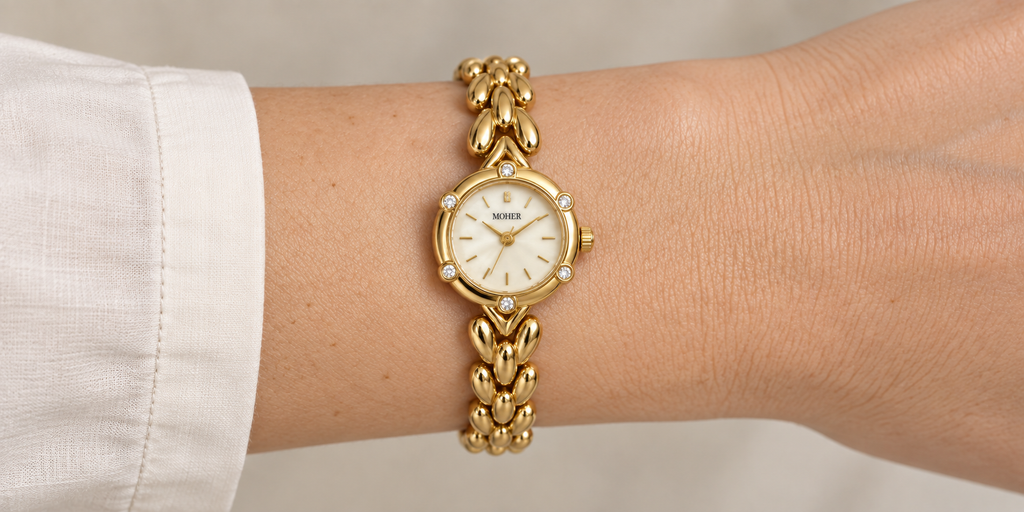
What Makes a Round Gold Watch Look Small and Delicate
The round outline and the space around it
The eye tends to notice the continuous outline of a round watch face. Where a narrow bracelet meets that circle, the change in width makes the face more distinct. With a wider bracelet, the transition can feel more gradual, so you notice the whole piece as a band of gold. Neither effect is automatically better. They simply place emphasis on different parts of the watch.
Also look at how much skin remains visible beside the case and between the links. Open spaces can make a design feel airy, while closely connected metal gives it a more continuous appearance. A round watch may therefore look delicate because of its bracelet layout even when its case is slightly larger than another model. Visual lightness, however, does not tell you the actual weight.
Case width and visible dial size
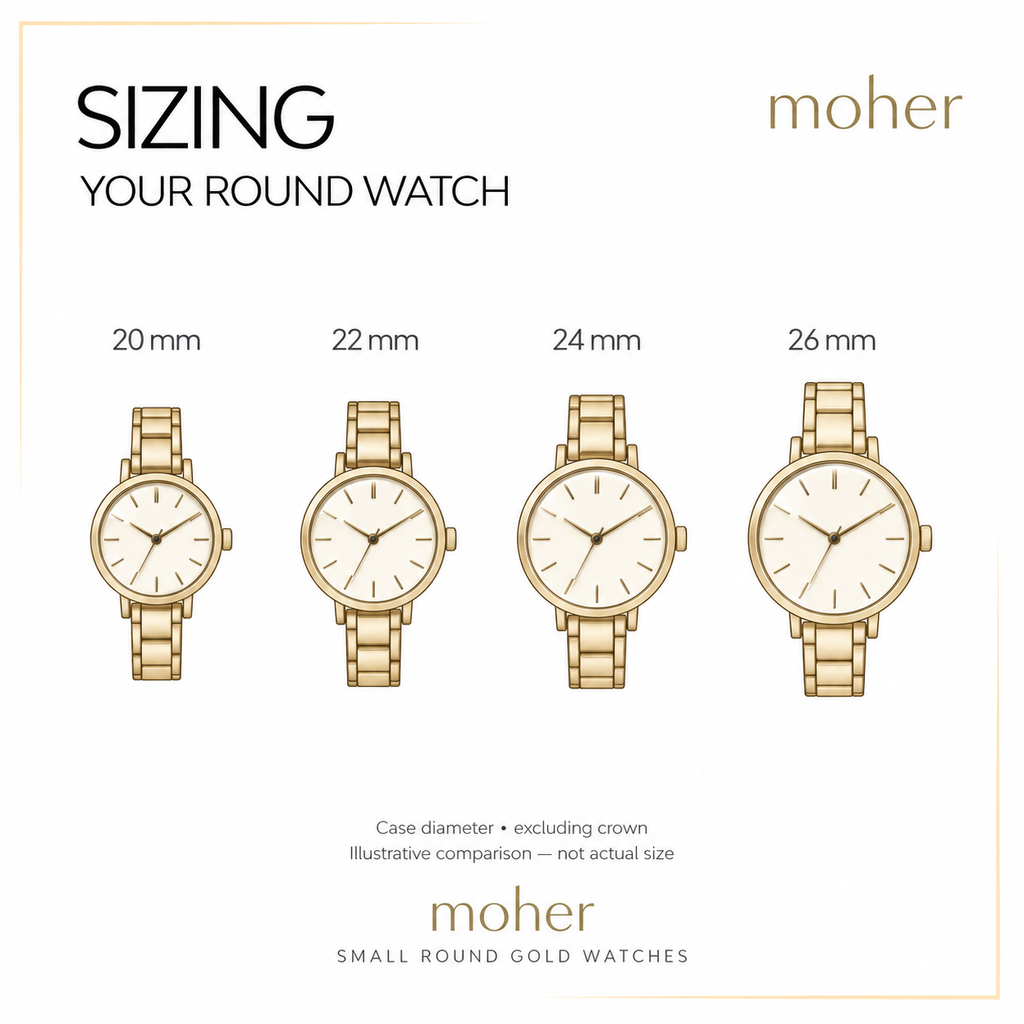
Case width measures the outside of the watch body; the dial is the face you read inside it. The bezel, or frame around the dial, takes up part of that overall width. Two round watches with the same stated case width can have different amounts of visible dial. A broader frame emphasizes the metal border, while a narrower frame leaves more room for the face. Check the listing’s measurement method, especially whether the winding or setting crown is included.
How to Choose the Right Round Watch Size for Your Wrist
Consider the top of your wrist as well as its circumference
Your wrist circumference helps you assess whether a bracelet can fit. The width across the top of your wrist helps you imagine how much space the round case will occupy. These measurements answer different questions. People with similar wrist circumferences can have different wrist shapes, so a size that looks compact on someone else may make a stronger impression on you.
Look for breathing room around the circular case if you want a restrained, jewelry-like effect. If you would rather see the dial clearly as part of your outfit, a slightly larger circle may suit you. There is no need to assign every wrist measurement a single correct watch diameter. Use proportion to narrow the options, then let your preferred appearance guide the final choice.
Choose how noticeable you want the watch to be
Think about the clothes you wear most often. A tiny face may provide just enough detail beside a plain knit, whereas a watch with a little more visible dial may hold its own beside a structured cuff. These are styling preferences rather than rules about body size. A small wrist does not prevent you from choosing a more noticeable watch, and a broader wrist does not rule out a very small one.
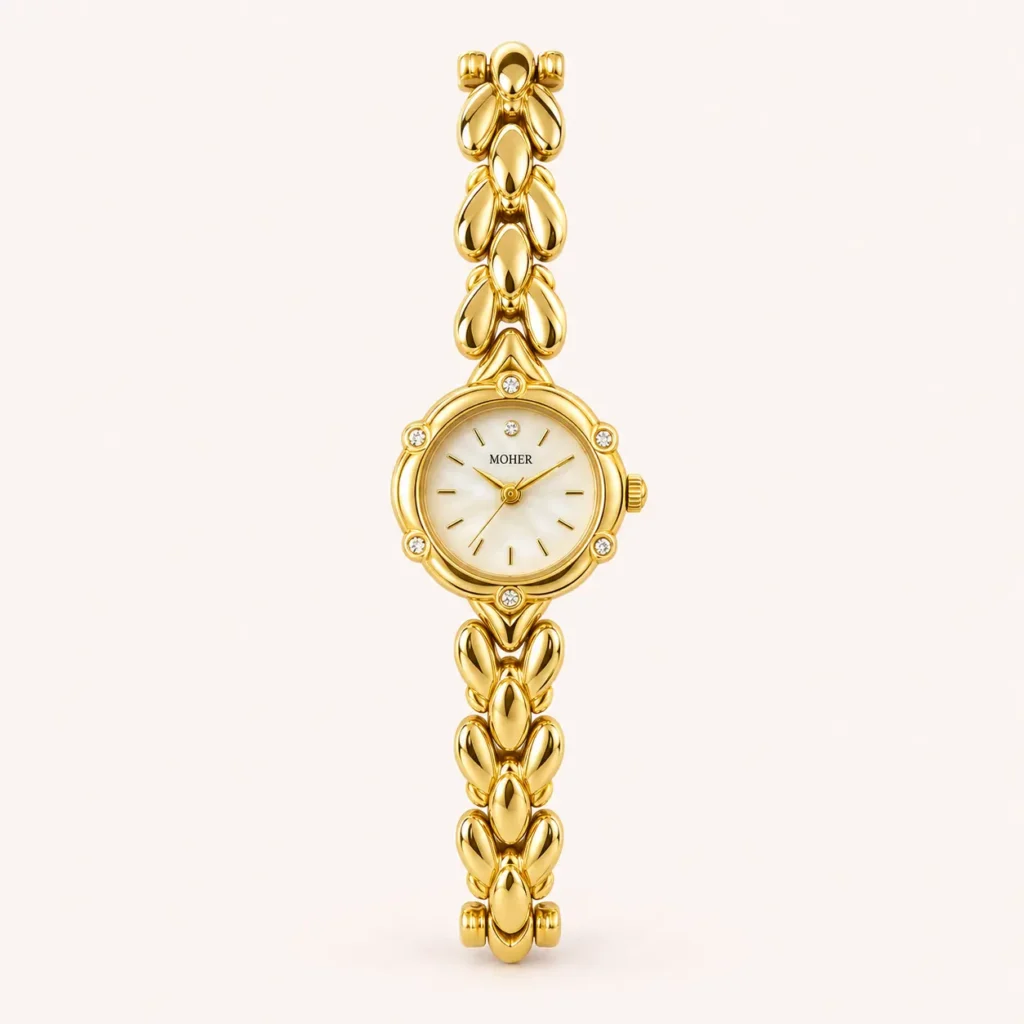
If you prefer a quieter detail at the wrist, look for soft tones and flowing lines that feel at ease with the clothes you already wear. A pale face can sit gently against warm gold, while rounded transitions help the eye move naturally from the circle into the bracelet. This can be especially appealing beside a plain cuff, where a little detail has room to be noticed. Consider whether you enjoy that gentle continuity or would prefer the dial to stand out more clearly.
Check the scale before ordering online
Use a ruler to draw circles matching the case widths on your shortlist, then cut them out and place them on your wrist. Add strips of paper in the listed bracelet widths if you want a clearer comparison. This simple exercise is more useful than comparing differently enlarged product photographs. It shows approximate coverage, although it cannot reproduce the thickness, curved connectors, weight, or flexibility of a finished watch.
A watch you already own is another useful reference. Measure its case and note what you would change: perhaps you like the face size but wish the bracelet were finer, or enjoy the bracelet width but want a smaller center. This turns an abstract search for a small watch into a specific comparison. If your current watch has an oval or rectangular face, use its measurements cautiously. A circle fills space differently, so matching just one dimension will not recreate the same outline on your wrist.
How Bracelet Width Changes a Small Round Gold Watch
A thin bracelet brings attention to the circle
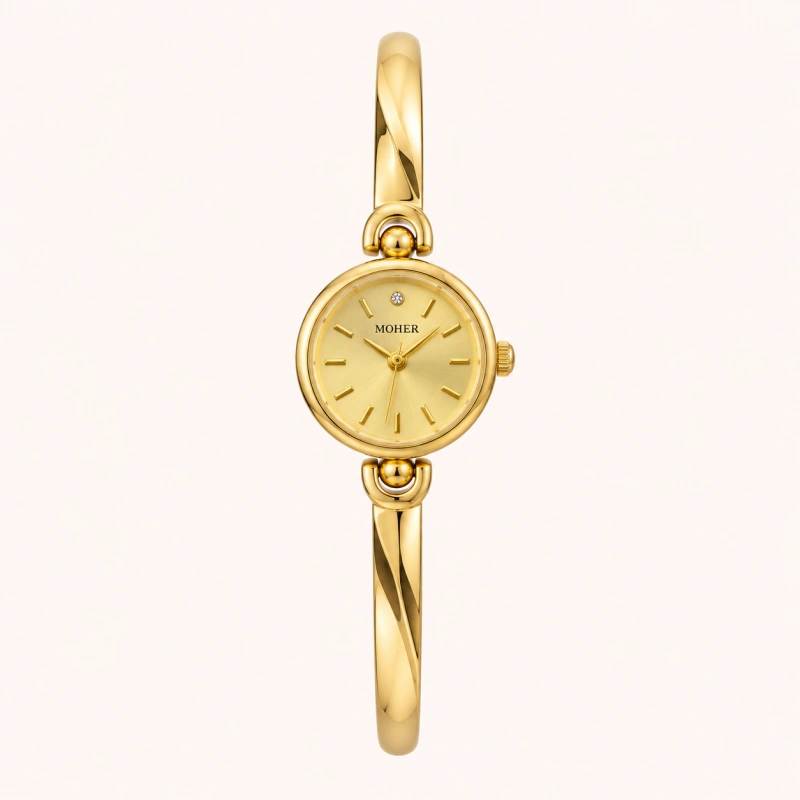
A narrow bracelet creates a clear change in width at the top and bottom of a round case. That contrast helps the circular face stand out, even when the watch is small overall. If you enjoy fine chains and subtle accessories, this can be an appealing starting point. The bracelet adds a line of gold while leaving the round face as the main feature.
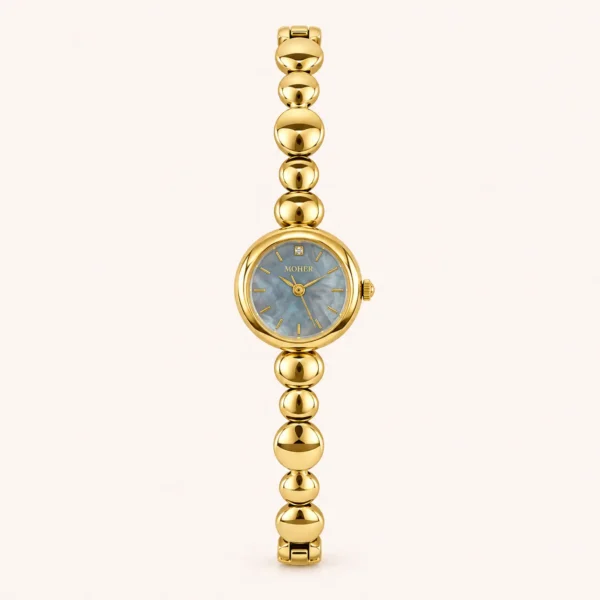
The space between the links can reinforce that delicacy. Allowing glimpses of skin through the bracelet creates a lighter, more open look around the round face, so the gold feels less continuous across the wrist. If you enjoy the appearance of fine jewelry, consider how those small spaces frame the circle and soften the overall impression. You may find that a little openness gives you the definition you want without needing to choose an even smaller dial.
Do not assume that the narrowest bracelet will always be the easiest to wear. Comfort also depends on link edges, articulation, clasp placement, and how closely the bracelet fits. A slender band that is too loose may allow the watch to move around. When comparing thin bracelets, look beyond the front photograph and check the clasp and adjustment information too.
A wider bracelet gives the whole watch more presence
A wider bracelet increases the visible band of metal on your wrist. The face can still be small, but the watch as a whole looks more substantial. You might prefer this effect if you like wearing a single accessory with enough detail to finish an outfit. It can also make the circular face feel integrated into the bracelet instead of appearing suspended on a fine chain.
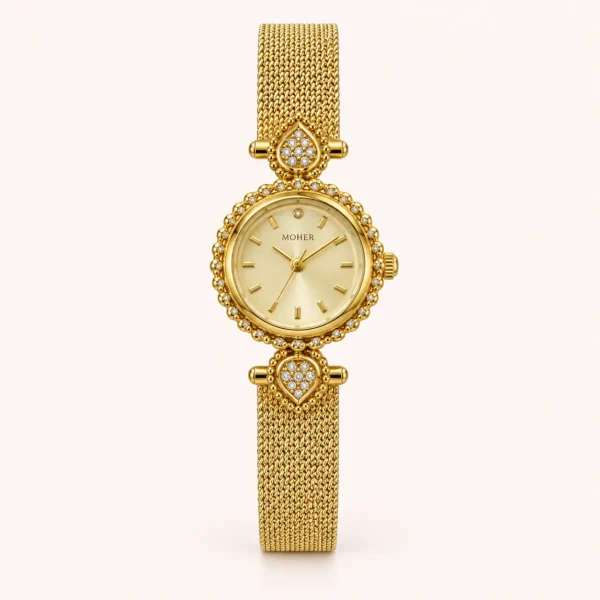
If you want the watch to feel a little more noticeable beside a simple sleeve, look for a fuller gold outline with fine surface detail. The round face can remain understated while the bracelet supplies more of the decoration. Closely spaced texture may add interest without making the dial itself busier, which is useful when you like a small face but do not want the whole piece to disappear into an outfit. Judge the balance from a normal viewing distance as well as up close.
How to Balance the Round Dial and Bracelet
A small round face with a slim bracelet
When both parts are small, the watch usually has a restrained footprint on the wrist. This is a useful direction if you want a piece that sits quietly beside everyday clothes. Look closely at the connection between the case and bracelet: a smooth transition keeps the design coherent, while decorative connectors can add interest without requiring a larger dial. The details near the circle matter as much as the links farther along.
A more prominent circle with a slim bracelet
If the circular case is noticeably wider than the bracelet, the face becomes the focal point. This combination suits someone who likes the traditional identity of a round watch but wants the bracelet to feel delicate. Remember that reducing bracelet width can make the face seem more prominent by comparison. A thinner band therefore does not automatically make the entire watch look smaller.
A small round face with a wider bracelet
A wider band brings the bracelet into equal conversation with the face. The watch may read first as a gold accessory, with the little round dial discovered within it. If that appeals to you, compare continuous textures with more open constructions. You can choose a stronger bracelet outline while still controlling how much gold surface is visible. Width and openness work together, so avoid judging either in isolation.
To compare these combinations fairly, view the watches at approximately the same scale. Enlarging every product until it fills the screen hides differences in size. Look at a full wrist photograph as well as a close-up, and consider which part attracts your attention first. That observation is often more helpful than looking for a universal ratio between dial and bracelet.
Why Bracelet Texture Matters Alongside Width
Open links and closely connected metal
Two bracelets of similar width may show very different amounts of metal. Open links reveal the wrist through their centers, breaking the gold into outlines. Closely connected links create a more continuous surface. If you like a noticeable bracelet shape but worry about too much gold, open construction can be a useful option. If you prefer an unbroken line around the wrist, a denser pattern may suit your taste.
Pay attention to repetition, too. Small repeating shapes can give a bracelet a finer appearance, while larger individual links make the pattern easier to notice from a distance. Neither tells you how flexible the bracelet is. For that, side views and photographs showing it curved around a wrist are more informative than a perfectly flat product image.
Woven and mesh-like details around a round face
Texture offers another way to add detail without increasing the size of the circular face. If a plain band feels too quiet for your taste, a fine repeating texture can bring a little more interest along the wrist while leaving the center relatively simple. This works particularly well as a styling idea when you want decoration that becomes more noticeable up close. Consider where you want that detail to sit, and allow enough simplicity around it for the round outline to remain clear.
A fine mesh-like pattern can create a different impression from large polished links, even when both are gold in color. Think about the textures already present in your clothing and jewelry. A detailed band can add interest beside a plain sleeve; a simpler band may be easier to combine with an ornate ring. Let one or two details lead so the little round face remains easy to appreciate.
Check Readability and Fit Before Choosing
Make sure the small dial is comfortable to read
A small watch should still suit the way you use it. Look at whether the hands separate clearly from the background, whether the hour markers are distinguishable, and whether reflections obscure the face. A pale dial is not automatically easier to read than a dark one. Contrast, hand shape, and the finish of the surface all matter, especially when the available space is limited.
Color can also give a small face its own presence. If warm tones seem to blend together more than you would like, a touch of cool color against gold can draw attention to the circular center without asking it to occupy more space. Repeated rounded shapes elsewhere in the design can help the contrast feel connected to the whole. Keep this visual effect separate from readability, however, and check that the hands remain distinguishable against whichever dial color you prefer.
Check adjustment and everyday movement
Before ordering, compare your wrist measurement with the bracelet’s usable adjustment range. A listed band length may not mean the same thing as the finished internal circumference, so check what is included in that number. Confirm how links are removed or how the clasp adjusts for the particular design. A mesh-like appearance alone does not tell you that a bracelet uses a sliding clasp.
Once fitted, the round case should stay in a comfortable position during ordinary movement without the bracelet pinching. Some movement is normal; constant rotation may suggest that the fit needs attention. Bend your wrist and try the watch with a sleeve you often wear. Case thickness, raised decoration, and the clasp can affect daily comfort even when the front view looks perfectly proportioned.
Choose the Proportions You Want to Wear
The most useful starting point is the effect you want on your own wrist. Decide whether the round face should be a quiet detail or the part you notice first. Then compare a few bracelet widths around that circle. A fine chain leaves more emphasis on the dial; a wider or more continuous band gives the bracelet a larger role in the overall design.
Bring the measurements back to real scale, look at the space between links, and check that the hands remain readable. Finally, make sure the bracelet can be adjusted comfortably for you. A well-chosen small round gold watch feels considered because those details work together. The right choice is the one whose proportions you enjoy seeing, and whose fit makes you want to wear it again tomorrow.