Use Code: WELCOME20 to Enjoy a 20% Discount Before Nov 10th.

How to Wear a Gemstone Watch with Bracelets Without Overcrowding Your Wrist

Sometimes, a small detail is enough to make an outfit feel complete: the soft green of jade, the warm brown and gold tones of tiger’s eye, or a delicate bracelet that catches the light as you move. A gemstone watch brings these touches together in a piece you can wear every day. With a compact face and a slender bracelet, it adds color and texture while leaving some of the wrist bare—a useful starting point when you want to wear a favorite bracelet alongside it. The key is deciding how much to add while giving each detail room to be seen.
That raises a familiar styling question: if your watch already looks like jewelry, can you still wear bracelets with it? Yes, but the most useful starting point is restraint. A gemstone watch introduces color, texture, and shape, so each additional piece changes the overall balance. Too many competing details can make a beautiful watch harder to appreciate.
To wear a gemstone watch with bracelets without overcrowding your wrist, let the watch lead, begin with one understated bracelet, and check the combination in motion. The following guide explains how to judge width, color, texture, and placement so your accessories feel considered and remain comfortable throughout the day.
Let Your Gemstone Watch Be the Focal Point
Before choosing bracelets to wear with a watch, look at the watch by itself. Notice what attracts your attention first. It might be the green stones along the bracelet, the striped appearance of tiger’s eye, or an ornate frame around a small dial. That feature can guide the rest of your styling. When the strongest detail remains easy to see, the whole combination usually feels more organized.
Choose a companion bracelet that repeats one element of the watch. A plain chain can echo the metal tone, while a small bead or subtle accent can relate to the dial color. You do not need to repeat every detail. If both pieces have large stones, decorative settings, and dangling charms, there may be no clear place for the eye to settle. Start with the simplest bracelet you already own and compare it with a more elaborate option.
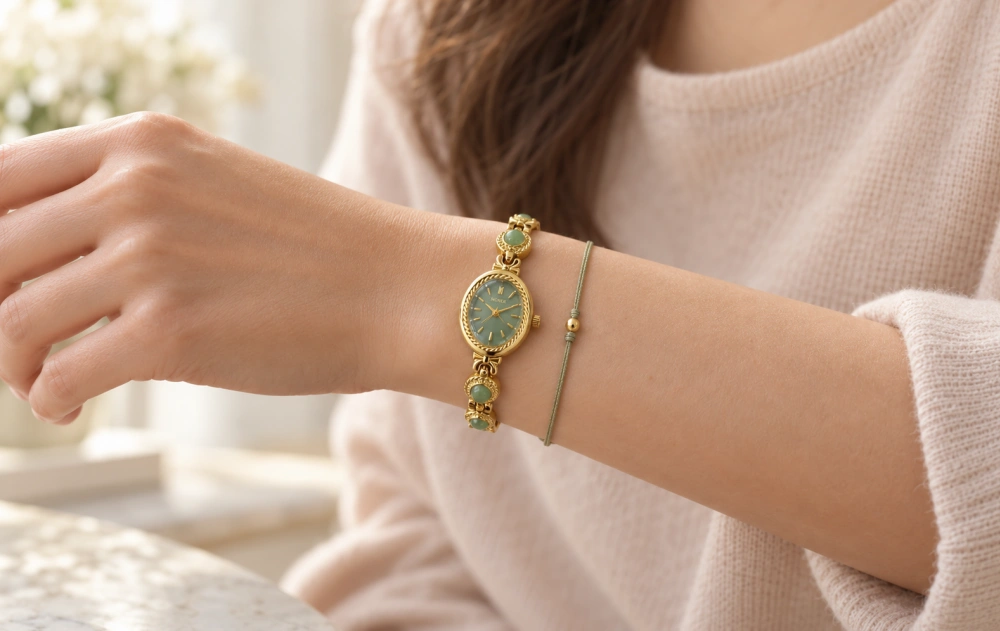
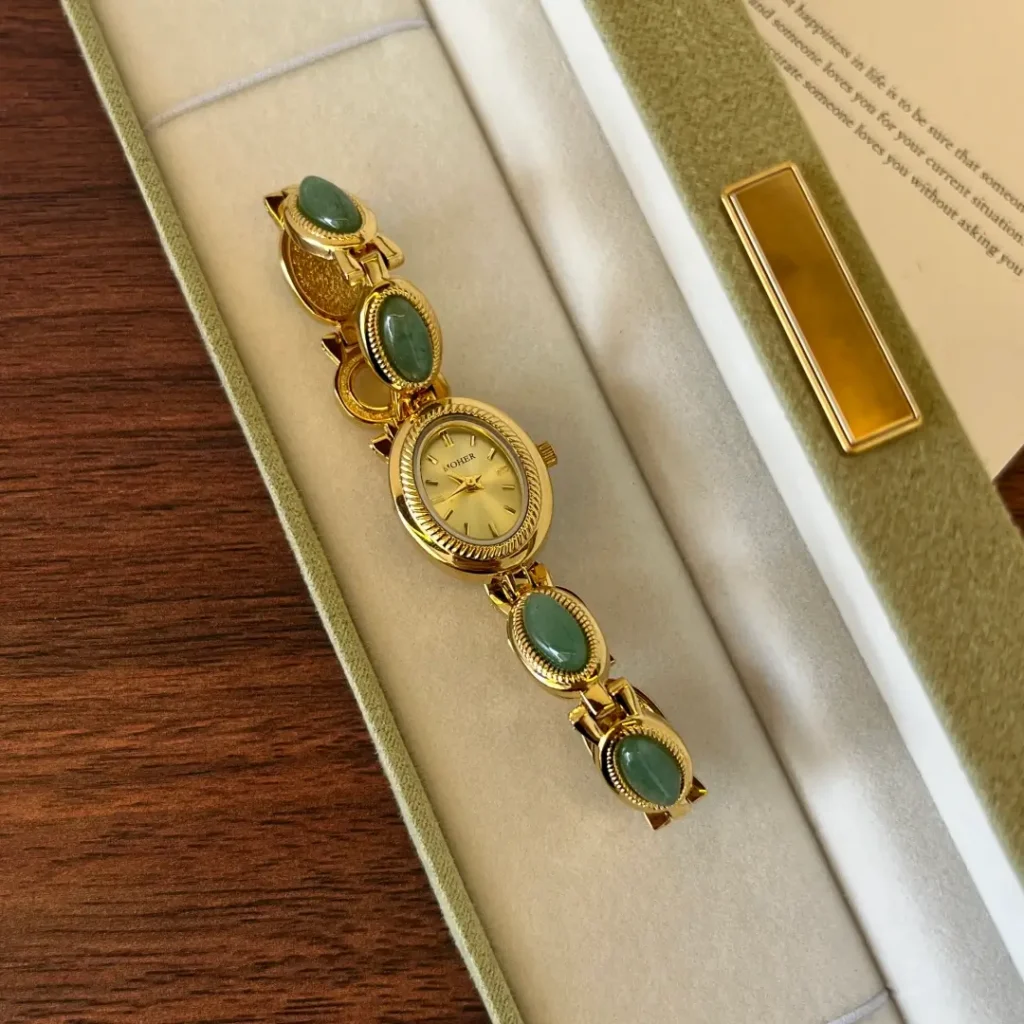
For example, a green jade bracelet watch with a gold-tone case already brings a distinct color and a decorative outline to your wrist. A fine gold-tone chain can support that appearance without introducing another strong color. Keep the jade visible and allow the watch’s bracelet design to remain recognizable. If the added chain disappears into the watch band or constantly crosses it, try a different length or move it to the other wrist.
Balance Bracelet Width with the Size of Your Watch
Look Beyond the Dial Size
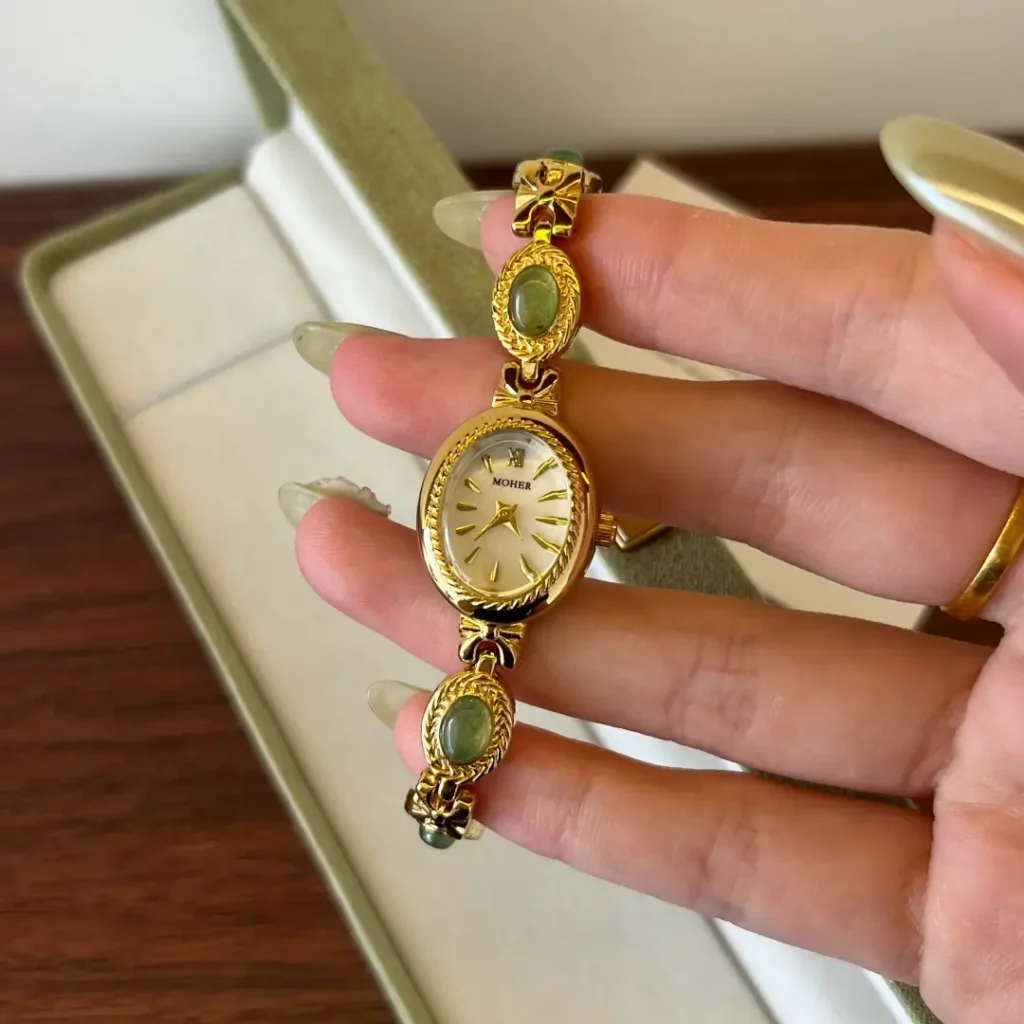
The dial is only part of the watch’s overall size. A small face can sit between prominent gemstone settings, and a narrow metal band can still look detailed if it has decorative links. Consider the full width and shape of the watch, including the stones, case edges, and attachments. This gives you a more useful picture of how much visual space it occupies than the dial measurement alone.
Place your chosen bracelet beside the watch before putting them on. A wide cuff may cover much more skin than a fine chain, even if both count as one bracelet. Large beads also add height as well as width. If the two pieces seem equally dominant, decide which one you want to emphasize and simplify the other. There is no required width ratio; the goal is a combination whose individual shapes remain clear.
Pair Detailed Watches with Simpler Bracelets
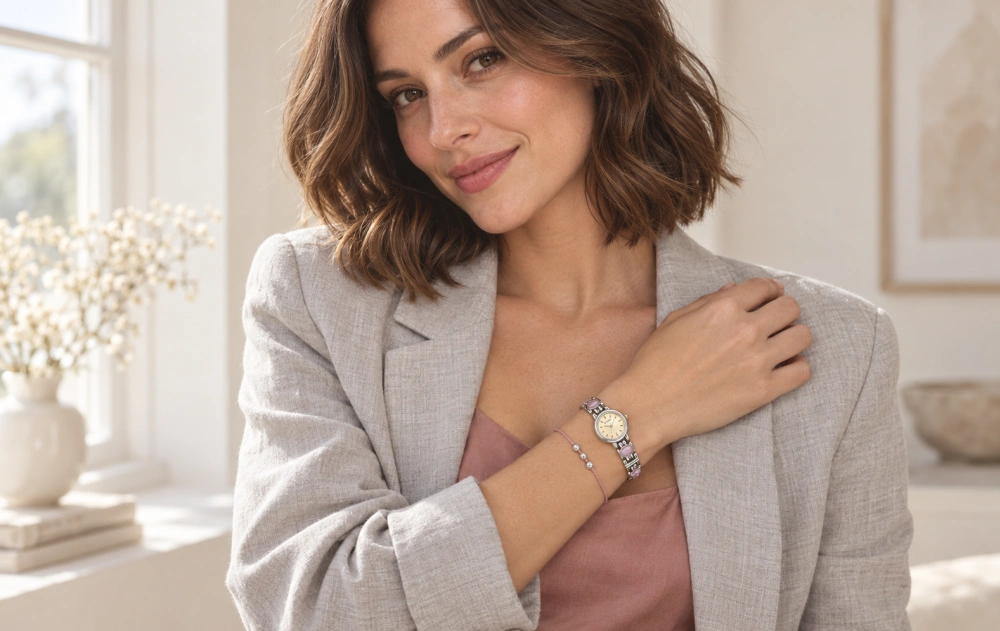
On a smaller wrist, a little color and delicate detailing can add interest without needing several layers. When the watch already brings soft green accents or a touch of warm metal to the combination, a fine, understated bracelet can be enough to complete it. Keep the surrounding shapes simple so those smaller details remain easy to appreciate, and leave some skin visible between the pieces. Try the pairing with your usual sleeves and move your wrist naturally; there should be room for both accessories to sit comfortably without overlapping.
Start with One Bracelet Then Decide Whether You Need More
If you are unsure how many bracelets to wear with a watch, start with one. Put on the watch first, add the bracelet, and look at the result from a normal viewing distance. A close-up can make you focus on tiny details, while a mirror shows how the accessories work with your hand, sleeve, and overall outfit. You may find that two pieces already provide all the variety you wanted.
A second bracelet may work when both bracelets are fine, their colors relate to the watch, and there is still comfortable room for movement. Add it only if it contributes something you want, such as a softer texture or a repeated metal tone. Two slim chains can look lighter than one broad bangle, so counting pieces alone will not tell you whether a stack is balanced.
Watch for signs that the arrangement has become crowded. The dial may be partly hidden, charms may catch on neighboring links, or everything may slide together toward your hand. Visually, you might struggle to identify the focal point. Remove one piece and look again. A successful watch and bracelet stack should be easy to enjoy without repeatedly separating or repositioning its parts.
Coordinate Metal Tones and Gemstone Colors
Repeat One Metal Tone for an Easy Starting Point
Matching the bracelet to the watch’s metal tone is a straightforward way to connect the pieces. A gold-tone case can pair with a gold-tone chain, while silver-tone details can be echoed in a silver-tone bracelet. The finishes do not need to be identical. A polished surface beside a subtler texture can still feel cohesive when the overall color is similar. Choose the combination in daylight as well as indoor lighting, because reflections can change how the tones appear.
Echo the Gemstone Color Without Matching Everything
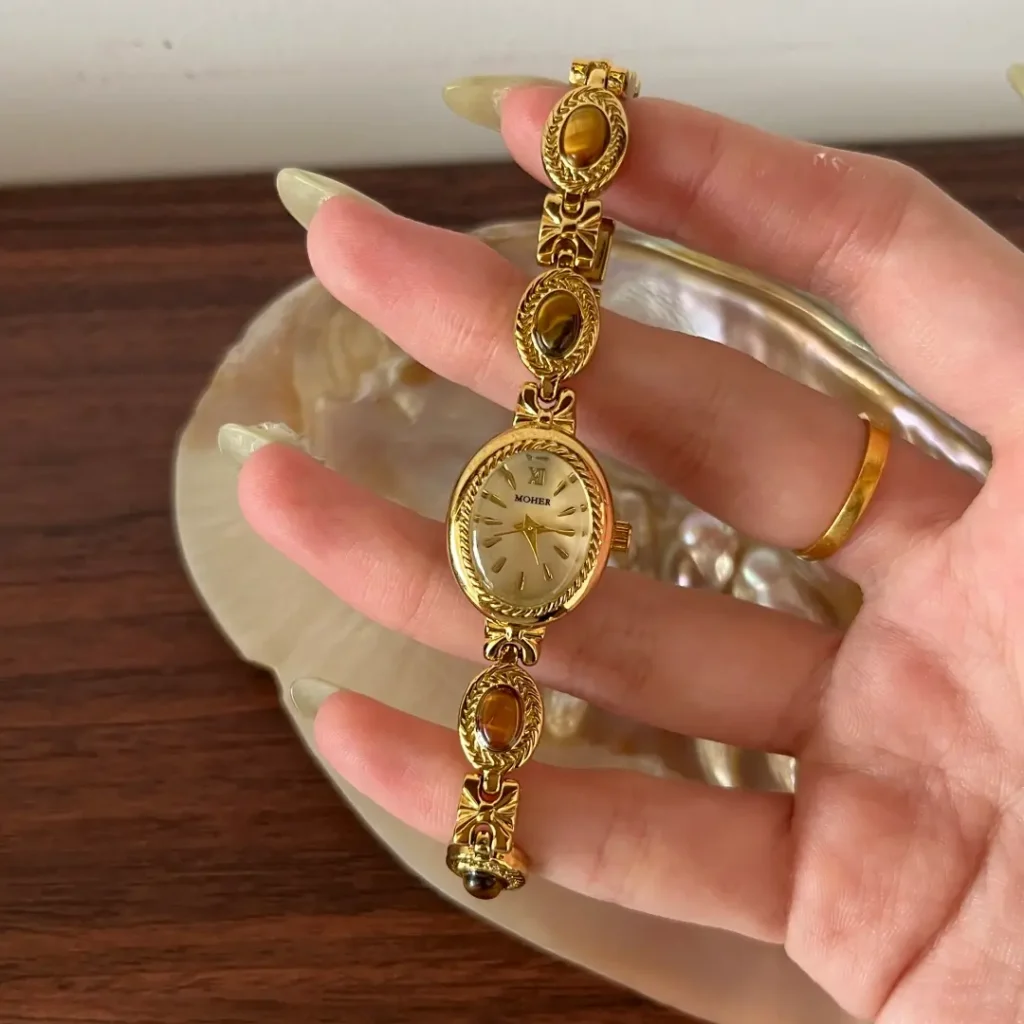
Gemstone colors offer another guide. The brown and golden tones associated with tiger’s eye can sit comfortably alongside warm metal colors and neutral clothing. A tiger’s eye gemstone bracelet watch with a mother-of-pearl dial already contains contrasting surfaces and several subtle shades. A simple warm-toned chain can pick up one of those existing elements while leaving the stone pattern visible. There is no need to add another large gemstone bracelet just to make the combination feel coordinated.
Mix Gold and Silver with a Clear Connection
You can wear gold-tone and silver-tone pieces together. To make the choice feel deliberate, try a bracelet that includes both colors or repeat the second metal tone in a ring. Keep one tone more prominent at first, especially when the watch also has colorful stones. This is a styling starting point, not a fixed rule. If your watch already provides a strong green or blue accent, limiting additional bright colors can make mixed metals easier to arrange.
Choose Bracelet Textures That Complement the Watch
Texture adds variety even when you keep the colors simple. A smooth bracelet, a fine linked chain, and a strand of small beads reflect light differently and create different outlines. Look at what your watch already contributes before adding another texture. A gemstone bracelet watch may combine polished stones, textured settings, and a glossy dial within a single piece. Adding several equally detailed bracelets can make those existing contrasts harder to notice.
Texture can create interest even when every piece stays within a similar color palette. Cool metallic tones and softly interwoven details can give a watch enough character that a simple companion bracelet is all it needs. Try a smooth, slender bracelet alongside a more textured watch band, allowing the difference in their surfaces to provide contrast. Repeating the metal tone helps connect the pieces without making them look identical. Leave a little space between them, then move your wrist naturally to check that each detail remains visible and the pieces do not continually rub against one another.
Consider physical contact as well as appearance. A bracelet that looks delicate may still have a clasp, edge, or charm that rubs against the watch. Smooth-looking beads are not automatically harmless, either. A mineral’s resistance to scratching depends on its hardness, not simply on how smooth it looks. Check the actual surfaces and how they move together. If a piece repeatedly knocks against the case or stones, choose a different arrangement or wear it on the opposite wrist.
Position Your Watch and Bracelets for Comfort
Keep the Dial Clear and the Fit Comfortable
Adjust the watch before adding bracelets. It should feel secure without digging into your skin, and it should allow you to bend your wrist comfortably. If it frequently slides onto the back of your hand, review the fit instead of using a bracelet to hold it in place. Check the adjustment instructions for your particular watch, since different bands and clasps do not necessarily adjust in the same way.
There is no universal requirement to wear a bracelet above or below a watch. Try both positions and check whether you can read the dial, reach the crown, and move your hand freely. Then type for a moment, pick up a cup, and pull a sleeve over your wrist. These ordinary movements reveal problems that a posed photograph can hide. A visible gap while your arm is still does not guarantee the pieces will remain apart during activity.
Use the Other Wrist When You Need More Space
A broad cuff, a loose bangle, or a bracelet with prominent charms may work better on the opposite wrist. You can still connect it to the watch through color or metal tone. This arrangement gives each piece more room and avoids forcing everything into one narrow area. If contact continues despite adjustments, separating the pieces is a practical choice, particularly when protecting decorative surfaces matters more to you than keeping the full stack together.
Adjust Your Watch and Bracelet Combination to Your Outfit
For workdays, consider your sleeves and the tasks your hands perform. A gemstone watch and one simple bracelet can bring detail to a plain shirt without filling the entire space below the cuff. If you spend hours typing, check where clasps rest against the desk and whether a charm interrupts your movements. A combination that looks attractive standing up should also feel comfortable while you are seated and working.
With a simple weekend outfit, you may want a little more texture. A fine chain beside a gemstone watch can be enough to make a plain knit or T-shirt feel more finished. If you add another bracelet, consider what the clothing already contributes. A busy print, decorative sleeve, or bright handbag can change the balance, even though none of those items sits directly next to the watch.
For dinner or a more formal occasion, look at your earrings, rings, and neckline before adding extra wrist jewelry. If the rest of your accessories are prominent, the watch may need only a quiet companion or no bracelet at all. Repeating a metal tone across a few pieces can create continuity. Leave room to appreciate the gemstone color and the watch’s shape instead of assuming that a dressier outfit always needs a larger stack.
FAQs About Wearing a Gemstone Watch with Bracelets
Can you wear a gemstone watch and a bracelet on the same wrist
Yes. Start with a bracelet that complements the watch’s size and detail, then check how the pieces move together. Keep the dial visible and avoid an arrangement that presses against your hand or repeatedly knocks against the case. If the two pieces do not sit comfortably together, wearing them on opposite wrists is equally valid.
How many bracelets should you wear with a watch
One is a useful starting point, especially with a decorative gemstone watch. A second fine bracelet may work if the combined width remains comfortable and the details do not compete. Judge the result by proportion and movement rather than a fixed number. A single wide bracelet can take up more space than two very slim chains.
Can you mix gold and silver when stacking a watch and bracelets
Yes. A piece that contains both metal tones can connect the combination, or you can repeat the second tone in a ring. Letting one metal color remain more prominent can make the arrangement easier to coordinate at first. Also consider the gemstone colors, since they add another element to the overall palette.
What bracelets work best with a gemstone watch on a small wrist
Fine chains and narrow bracelets with few dangling details are practical starting options. Compare their width with the whole watch, including its stone settings. A small dial alone does not guarantee a suitable fit. Check the band length, adjustment range, and available space on your wrist, then test the combination while bending your hand and moving normally.
How can you reduce rubbing between a bracelet and a watch
Check for loose movement, protruding charms, and clasps that repeatedly touch the case or stones. Adjust the fit where appropriate and try a different position, but do not assume a softer-looking bracelet prevents scratches. If rubbing continues, wear the pieces on separate wrists. Follow the care instructions for each item, including any guidance about water, perfume, and physical activity.
Create a Balanced Look with Thoughtful Details
A balanced wrist stack begins with a watch you enjoy wearing and a clear idea of what you want to highlight. Add one bracelet that relates to its color, shape, or texture, then check the result with your outfit and everyday movements. Keep the pieces that contribute to the look and remove anything that gets in the way. At MoHerwatch, our gemstone watches offer jewelry-inspired detail that can stand on its own or become the center of a simple combination. Whether you choose green jade, tiger’s eye, or a style with a mother-of-pearl dial, give its distinctive features enough space to be seen.