Use Code: MOHER50 to Enjoy a 50% Discount Before Sep 27th.

Gemstone Bracelet Watches for Small Wrists: What to Check Before Buying

If you have small wrists, shopping for a watch can involve a familiar hesitation: it looks beautiful in the photograph, but will it feel too large on you? Perhaps you have bought a bracelet watch that kept turning sideways, or discovered that a supposedly adjustable band still could not be shortened enough. What you want is a watch that looks proportionate, stays comfortably in place, and brings the character of jewelry to your outfit without feeling cumbersome. You should be able to enjoy the color of jade, the warm patterns of tiger’s eye, or the glow of mother of pearl in a design that suits your wrist.
Finding that balance takes more than choosing the smallest dial. The bracelet’s construction, the size of its decorative elements, and its adjustment range all matter. A compact watch head can still come with a bracelet that is too long or too rigid.
This guide explains what to check before buying a gemstone bracelet watch for small wrists, from measuring your wrist to comparing case dimensions and confirming the smallest wearable size. With those details in hand, you can choose a style you love with greater confidence.
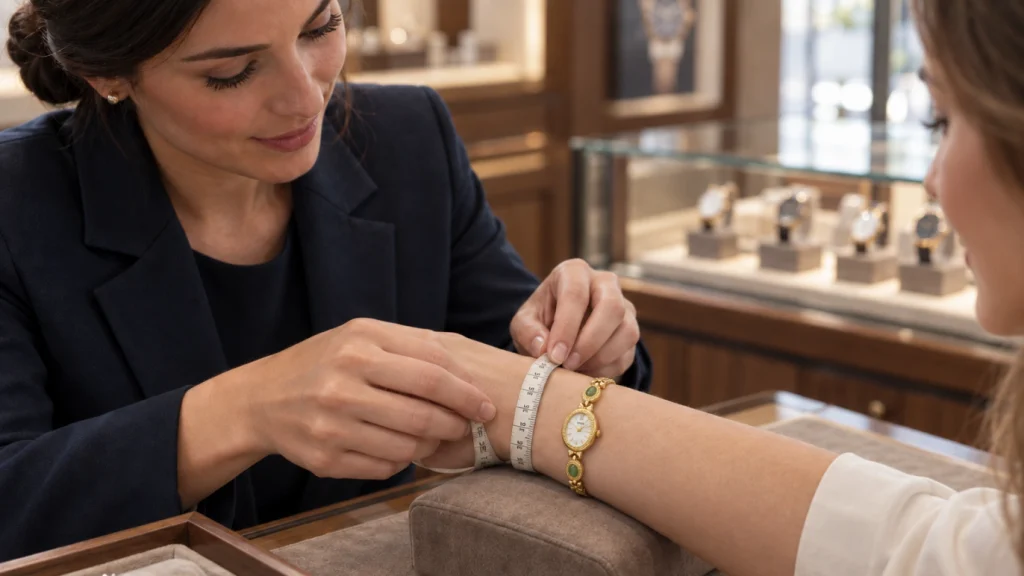
1. Measure Your Wrist Before Comparing Watches
Before comparing product photographs, establish your wrist measurement. Descriptions such as “dainty,” “petite,” and “small face” help communicate style, but they cannot tell you whether a particular bracelet will fit.
Measure Where You Actually Wear Your Watch
Wrap a flexible measuring tape around the position where you normally wear your watch, usually just above the wrist bone toward your forearm. Keep the tape in contact with your skin without pulling it tight or leaving a large gap. When repeating the measurement, keep your wrist position and tape placement consistent, because changes in posture and measuring position can affect the result.
If you do not have a measuring tape, use a narrow paper strip. Mark where the ends meet, then lay it flat against a ruler. Record the measurement in centimeters or millimeters so you can compare it with the product information.
Measure your wrist itself first. Any additional room for comfort should be considered separately rather than built into an uncertain measurement.
Understand Which Measurement You Are Comparing
Wrist circumference, listed band length, and the internal circumference of a closed bracelet are different measurements.
For example, knowing that your wrist measures 14 cm does not tell you whether a watch advertised with a 19 cm band will fit after adjustment. You need to know what that band measurement includes and how small the finished bracelet can become.
Wrist shape matters too. Two people with the same circumference may have different amounts of flat space across the top of their wrists. Your measurement is the starting point; the watch’s shape and construction complete the picture.
2. Check Case Width, Length and Shape Together
Case width is useful when comparing watches, but it should never be the only dimension you consider. A watch occupies space in several directions, and the parts surrounding the dial can make a noticeable difference.
Case Width Is Only the Starting Point
The dial is the surface displaying the time. The case is the surrounding structure that holds the watch mechanism and crystal. A small dial inside a broad decorative border may look larger on your wrist than you expected.
Check whether the listed width includes the crown, the small control at the side of the case. Product measurements do not always use the same conventions, so ask if the distinction could affect your choice.
For a gemstone bracelet watch, also look at any decorative settings beside the case. They can extend the visible footprint even when the central watch head is compact.
Look Beyond the Dial to the Full Watch Head
The length running from the top of the watch toward the bottom is particularly relevant to how it sits across your wrist.
Some designs have projecting lugs, ornamental connectors, or a first bracelet section that does not immediately bend downward. These parts may extend beyond the case itself.
A product’s “Case Length” is not necessarily the complete end-to-end span including those connections. Look for side photographs showing where the bracelet begins to curve. Ideally, the watch should follow your wrist comfortably rather than bridge across it with projecting ends.
Compare Round and Oval Designs at Actual Size
Round and oval cases distribute their visual weight differently. An oval design may look narrow from side to side while extending farther along the wrist. Neither shape is automatically the better choice.
Draw the listed case dimensions on paper, cut out the outline, and place it on your wrist. This gives you a simple impression of scale, although it cannot reproduce thickness, weight, or bracelet flexibility.
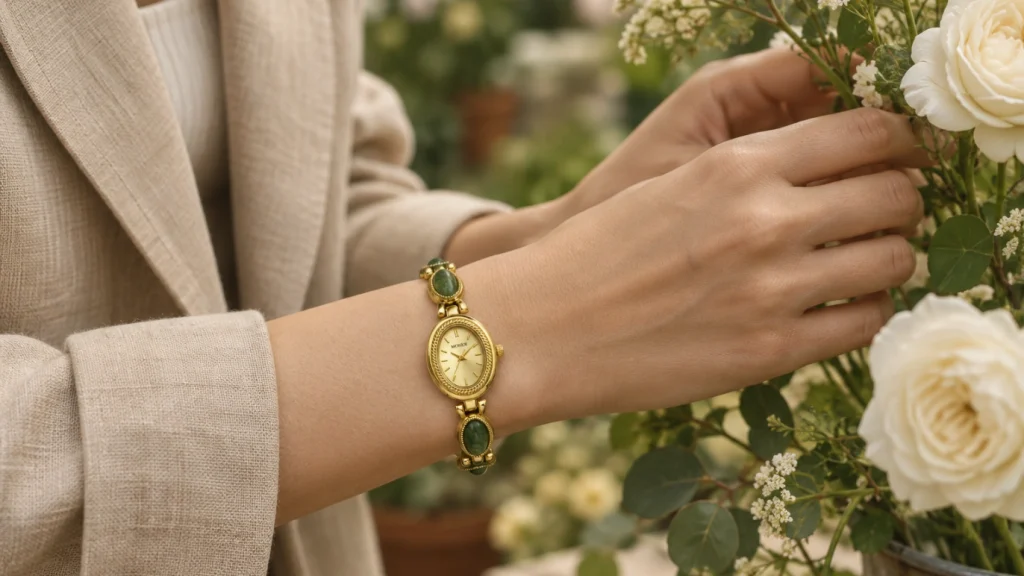
For a practical example, look at the gold oval green jade bracelet watch. Its oval case and green stone links show why it helps to compare both the watch head and the surrounding decoration. Use the listed case dimensions for your paper outline, then check the photographs to see how the bracelet connects and curves.
3. Look at Bracelet Width, Stone Size and Flexibility
Two watches with similarly sized cases can look quite different once their bracelets are included. For small wrists, the relationship between the watch head and the surrounding decoration deserves close attention.
Compare the Chain and the Widest Decorative Element
A narrow chain can leave more visible space around the wrist, creating a delicate appearance. However, the connecting chain may be much narrower than the gemstones or their settings.
Look at the widest part of the design. A bracelet with slim connections and large stone settings will have a different presence from one with small, evenly spaced accents.
Neither approach is wrong. The question is whether you prefer the watch to blend into your everyday jewelry or become a more noticeable feature.
Check How the Bracelet Bends
Flexibility affects how closely a bracelet follows the wrist. Look at the joints between decorative links and the points where the bracelet meets the case.
A series of shorter, movable sections may follow a tight curve differently from a longer, rigid section. Product photographs showing the bracelet from the side or draped naturally can help you understand its construction.
A gemstone setting does not necessarily have to be removable or flexible itself, but the surrounding connections need to work with the shape of your wrist.
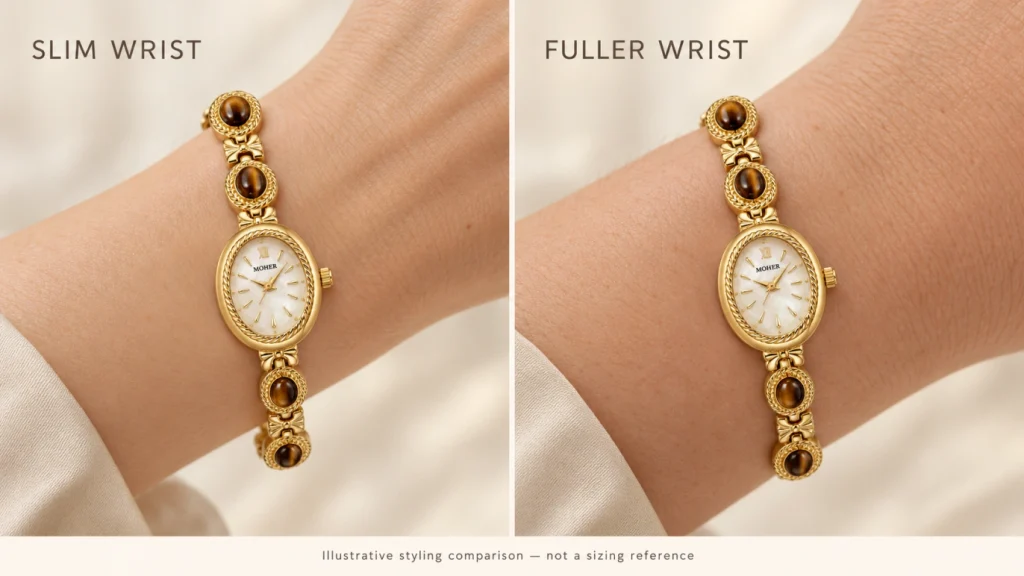
The tiger’s eye and mother-of-pearl bracelet watch offers another useful example. Look closely at the gold connectors between its oval stone settings, as well as the points where the bracelet meets the case. These details help you assess how the decorative sections are arranged and what to ask about their movement before choosing a size.
Separate Visual Weight from Actual Weight
Dark stones, textured metal, and closely spaced decoration may make a bracelet look substantial. That does not establish how heavy it feels.
If weight is a deciding factor, ask for the watch’s weight in grams. A close-up photograph cannot provide that information, and a narrow bracelet is not automatically lightweight.
4. Find Out How Small the Bracelet Can Actually Go
For small wrists, adjustment range can be more important than the original bracelet length. “Adjustable” is useful information, but it is only the beginning of the answer.
Original Length vs. Minimum Wearable Size
A bracelet can be adjustable and still remain too large after all permitted adjustments have been made.
Ask for the smallest internal circumference when the watch is fastened and adjusted as intended. Also ask how that measurement was taken. The thickness of the bracelet and the way its components curve can affect the space available inside.
If your wrist measures 14 cm, for example, give the seller that actual measurement and explain whether you prefer a closer or looser fit. Do not assume that a listed band length can simply be reduced by a certain amount without checking the construction.
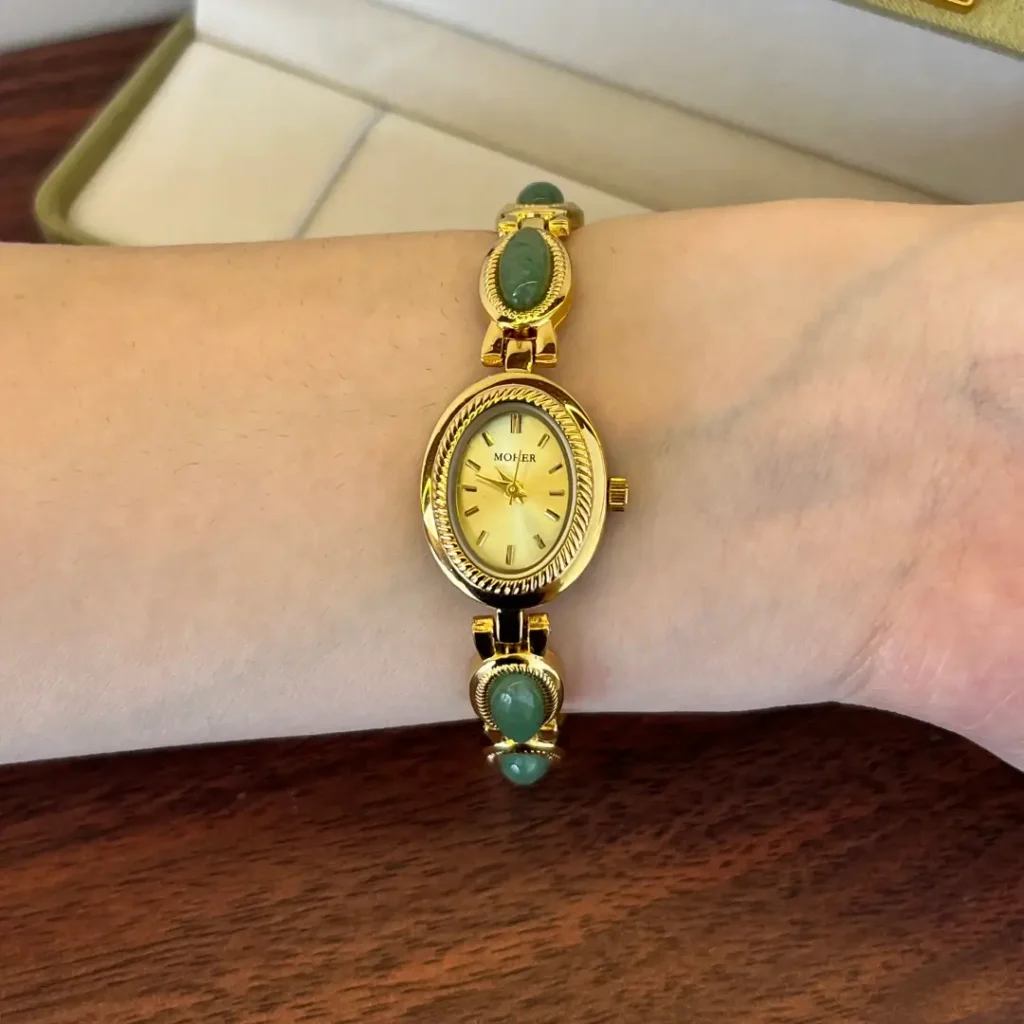
If you are considering the gold small-face green jade gemstone bracelet watch, apply the same check: compare its listed band length with your wrist measurement, then confirm the smallest closed size and the permitted adjustment method. This lets you explore a stone-accented design without relying on the words “small face” to establish fit.
Ask About Removable Links and Adjustment Increments
On a removable-link bracelet, check which sections can actually be taken out. Decorative stone settings may not be intended for removal.
The size of each removable link matters as well. If one adjustment leaves the bracelet loose but the next makes it tight, ask whether the design offers a smaller adjustment option.
Useful questions include:
- What is the smallest closed bracelet size?
- Which links can be removed, and how much length does each remove?
- Is there a finer adjustment at the clasp?
- Can the clasp remain comfortably positioned after shortening?
Removing links changes the balance of the bracelet. The arrangement should keep both the watch head and clasp in sensible positions rather than concentrating the remaining decoration awkwardly on one side.
Check the Method for the Specific Bracelet
Different constructions require different checks. A sliding clasp may have a limited travel range. An elastic bracelet can stretch for putting it on, but still be too loose at rest. A fixed bangle depends on its internal shape and opening.
An included adjustment tool does not mean every part of every bracelet can be resized. Follow the instructions for the specific model, and ask for help if its construction is unclear.
5. Choose Gemstone Details Without Adding Unwanted Bulk
Having small wrists does not mean limiting yourself to plain watches. Color, pattern, and reflection can create interest within a compact design.
Keep the Decorative Focus on the Dial
If you like a restrained bracelet, consider a watch that places most of its visual detail in the dial. Mother of pearl, for example, can add a reflective surface while leaving the bracelet relatively simple.
This approach may appeal if you already wear rings or other jewelry and want your watch to contribute another detail without filling your wrist with decoration.
Mother of pearl is a shell material rather than a mineral gemstone. When comparing these styles, pay attention to the actual material description as well as the overall appearance.
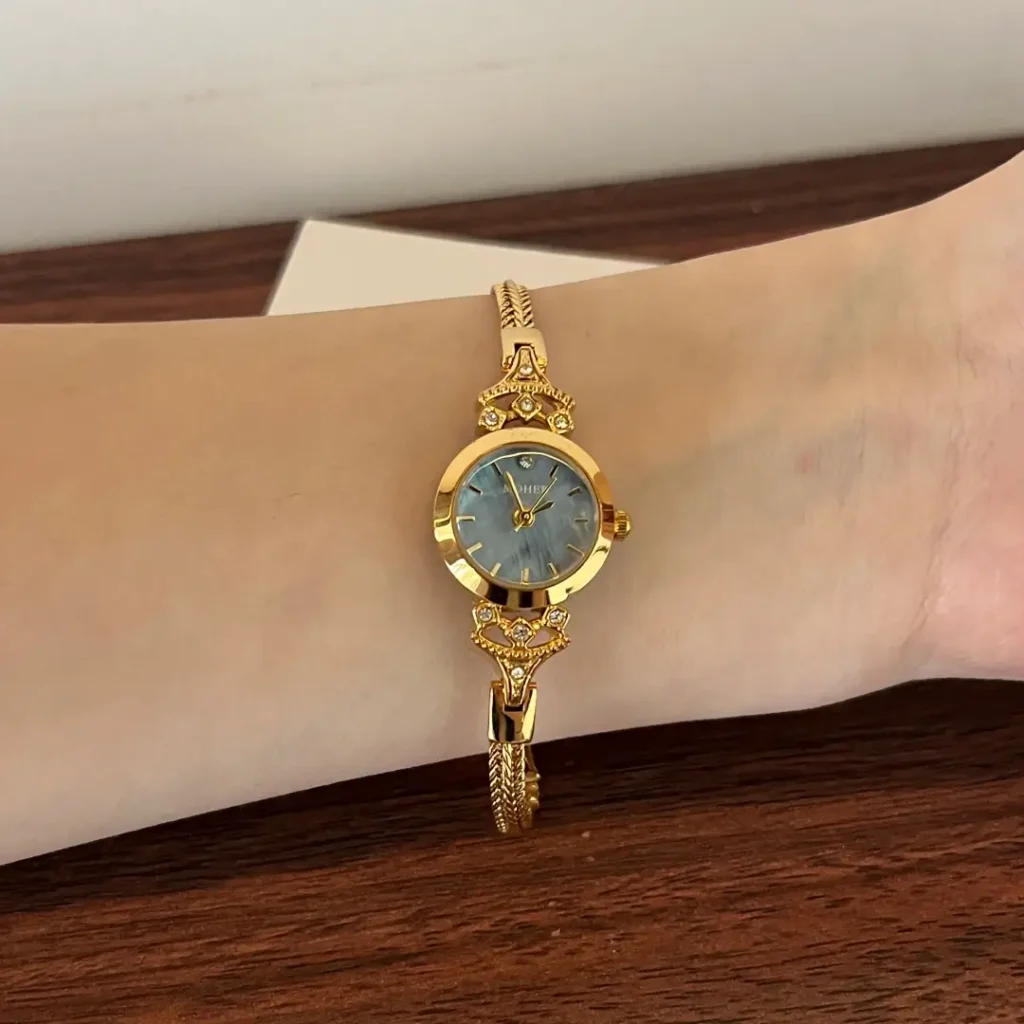
For this look, consider the blue mother-of-pearl slim-chain bracelet watch. Its blue dial adds color while the narrow gold chain keeps the bracelet visually delicate. The decorative connectors on either side of the case also deserve attention when you compare the complete watch head with the space across your wrist.
Let the Bracelet Carry the Color
If the bracelet is what attracts you, look at the size and spacing of its stone accents. Smaller settings with visible space between them can create a different rhythm from closely arranged decorative links.
Jade or tiger’s eye can bring recognizable color to a watch without requiring a large dial. What matters for fit is how those materials are incorporated: the setting dimensions, the connections, and the final bracelet size. The colors of mineral gemstones can be influenced by impurities and defects in their crystal structures.
Choose the Presence You Actually Enjoy
The smallest watch is not automatically your best choice. You may prefer a more visible stone bracelet, even on a narrow wrist.
Use measurements to establish whether it can fit, then use your preferences to decide how much presence you want. A watch can be expressive and proportionate at the same time.
6. Check Everyday Comfort and Readability
A watch that looks right in a photograph still needs to work during your day. Think about the movements and situations in which you will wear it most often.
Consider Thickness and Contact Points
Case thickness affects how the watch sits under sleeves and how prominent it feels above the wrist. A taller case is not necessarily uncomfortable, but it may suit your routine differently from a lower design.
Look at the clasp and the underside of decorative elements too. These are the parts that may contact your desk while typing or using a mouse. Comfort also depends on material compatibility: nickel in watches and jewelry can trigger skin reactions in people with nickel allergy, so check the metal specifications if you know you are sensitive to it.
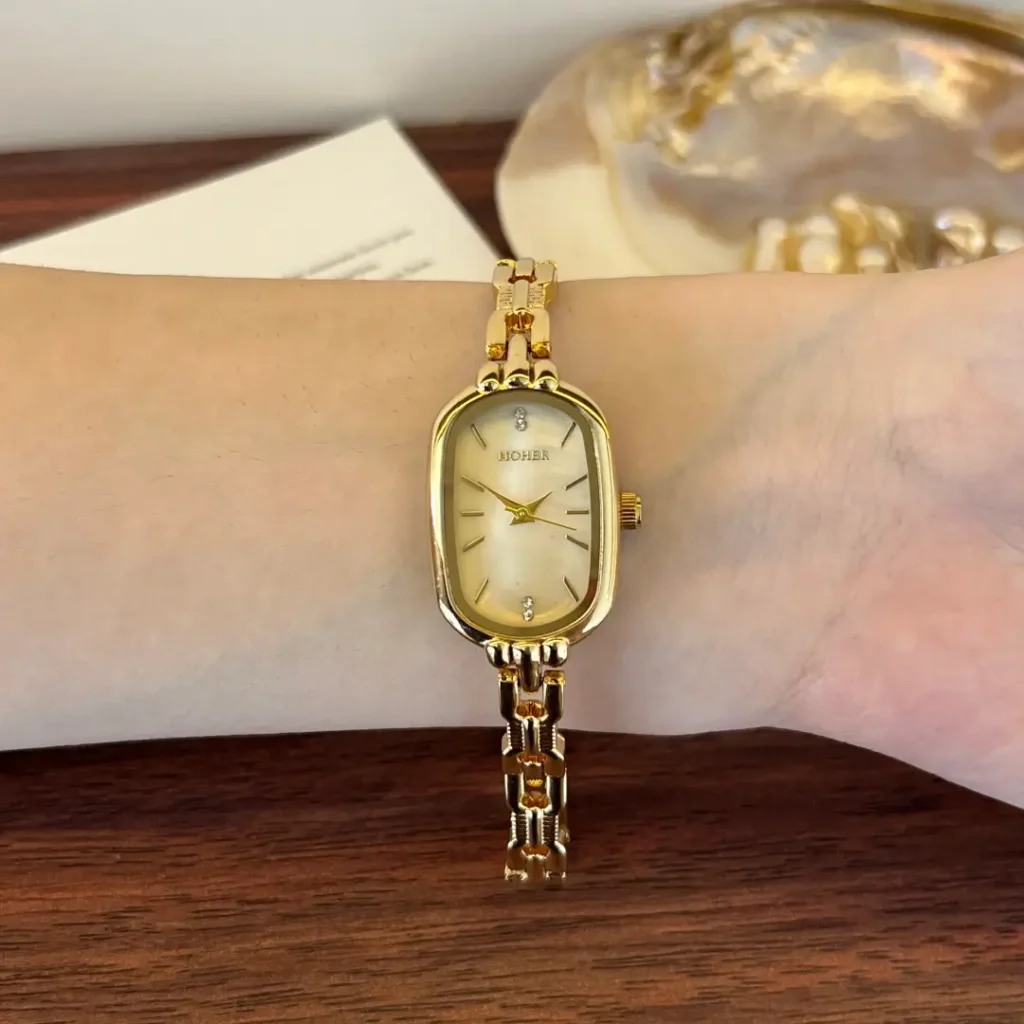
When comparing profiles, include the beige mother-of-pearl gold oval bracelet watch in your shortlist. Review its listed case thickness alongside its width and length, then look at the side and wrist photographs to judge how it may sit with your usual sleeves. Those details are more useful than assuming an oval shape will automatically feel comfortable.
Leave Comfortable Room Without Excessive Movement
The aim is a fit that allows ordinary wrist movement without pinching or excessive sliding. Some movement is normal for a bracelet-style watch; repeatedly slipping far around the wrist may indicate that its size or balance needs attention.
Make Sure the Time Is Easy to Read
A very small dial may be attractive, but consider the contrast between the hands and background. Decorative markers and reflective surfaces can look different under changing light.
Look for clear dial photographs from several angles. If reading the time quickly is important to you, give that practical detail as much attention as the bracelet.
7. A Quick Checklist Before You Order
Before placing your order, review the information that affects fit most directly:
- Your wrist measurement: Have you measured where you normally wear the watch?
- The complete watch-head size: Have you checked case width, length, and any projecting connectors?
- The adjustment range: Do you know the smallest wearable size and how it is achieved?
- The supporting photographs: Have you seen the front, side, clasp, and bracelet connections?
- The purchase conditions: Have you checked whether resizing or removing links affects return eligibility?
Wrist photographs are helpful for understanding styling, but their value for sizing depends on context. If the model’s wrist measurement is not provided, the photograph cannot establish how the watch will look on yours.
When a key measurement is missing, ask about it before ordering. A precise answer about the bracelet’s minimum size is more useful than a general description such as “suitable for most women.”
8. Frequently Asked Questions
What Watch Case Size Works Best for Small Wrists?
There is no single case size that works for every small wrist. Width, length, projecting lugs, and bracelet construction all affect the fit. Compare the complete footprint with your wrist and decide whether you prefer a delicate or more noticeable look. A paper outline can help with the initial comparison.
Will an Adjustable Bracelet Watch Fit a 14 cm Wrist?
Possibly, but the word “adjustable” alone does not confirm it. Ask for the smallest closed internal circumference and the available adjustment increments. Share your 14 cm wrist measurement with the seller so they can assess the specific model. You also need enough room for comfortable movement, rather than assuming an exact numerical match is ideal.
Why Does My Bracelet Watch Keep Turning Around My Wrist?
Excess length is one possible reason, but balance and shape can contribute too. A heavier watch head, an awkwardly positioned clasp, or rigid sections may affect how the watch rests. Check the adjustment and construction together. Tightening the bracelet excessively is not a good solution if the underlying shape does not suit your wrist.
Can Small Wrists Wear Gemstone Watches with Larger Decorative Links?
Yes, provided the bracelet’s dimensions and construction work for the wearer. Look at the length of rigid sections, how the links curve, and the smallest adjustable size. Larger decorative elements can be a deliberate style choice. They do not automatically make a watch unsuitable, just as a small dial does not automatically make it a good fit.
Choose a Watch That Fits Your Wrist and Your Style
A well-chosen gemstone bracelet watch can offer the proportions you want, a comfortable fit, and the pleasure of wearing something distinctive.
Start with your wrist measurement, compare the whole watch rather than the dial alone, and confirm the adjustment range. Then choose the colors and details you enjoy, whether that means green jade, warm tiger’s eye, or a delicate mother-of-pearl dial.
Small wrists leave plenty of room for personal style. Clear sizing information helps you find a watch you can wear with confidence.