

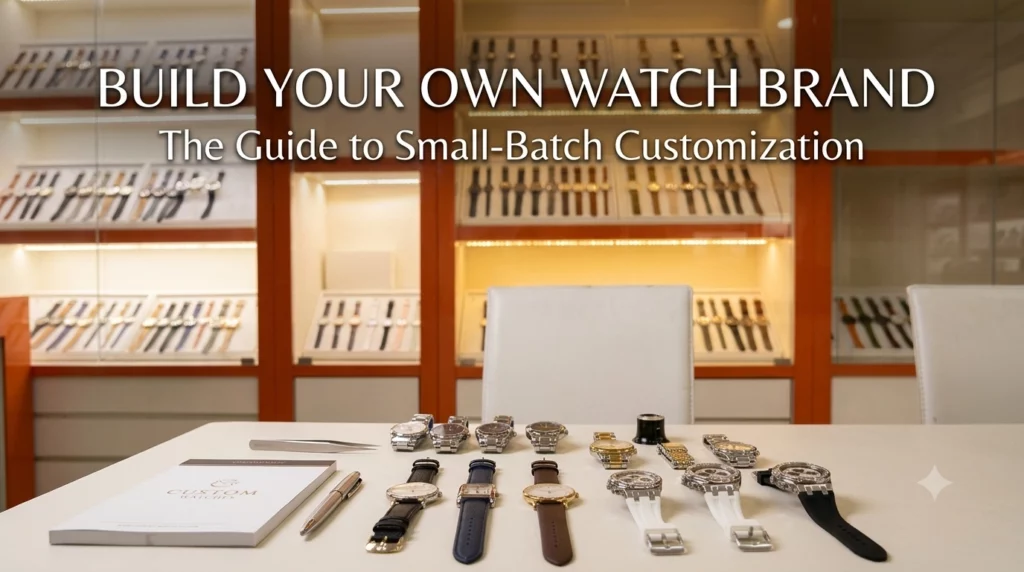
Picture this: you’ve decided you want to build your own watch brand. You have a design in your head, maybe even a sketch on paper, and you’re ready to make it real. So you start reaching out to factories. The first one tells you their minimum order is 500 pieces. The second says 1,000. A few even quote higher than that. You do the math, and the number is far more than you can afford for a first run, let alone a run you haven’t tested in the market yet.
This is one of the most common, and most discouraging, moments for anyone trying to start a watch brand. Many people give up at this stage, deciding the whole idea was unrealistic to begin with. Others push forward anyway, stretching a tight budget across a large order and accepting compromises in quality just to hit the minimum. Neither outcome should be necessary, and neither reflects what building a brand is actually supposed to feel like.
What if all you actually need is 100 pieces? Or 50? What if there were a manufacturing partner who took that order just as seriously as a factory-scale one, without treating you like an inconvenience along the way?
Why Most Factories Can’t Do Small Batches
There’s a reason small orders get turned away so often, and it isn’t arbitrary or personal. Tooling costs, the cost of building molds, setting up a production line, and preparing for a specific design, are usually spread across the total number of units produced. The more units, the lower the cost per piece. On a large order, that math works comfortably in the factory’s favor. On a small order, it doesn’t, so many factories would simply rather not bother with the arrangement at all.
Switching a production line between different specifications also carries a real cost. Changing over parts, recalibrating equipment, and adjusting workflows for a new design takes time and coordination regardless of whether you’re making 50 units or 5,000. Factories built around large-volume efficiency are naturally reluctant to absorb that overhead repeatedly for small, one-off runs, since it disrupts the rhythm that keeps their bigger clients happy.
And here’s the part that matters most to you as a customer: quality standards shouldn’t drop just because the order is small, but in practice, they often do. When a factory treats a small order as a low-priority afterthought, corners get cut somewhere along the line. Inspection gets rushed. Materials get quietly substituted. Attention to finishing details slips. The result is a product that doesn’t actually reflect the brand you were trying to build in the first place, no matter how good your original design was.
The real takeaway is this: small-batch customization isn’t a “lite” or watered-down version of manufacturing. If anything, it demands more supply chain sophistication, not less, because you still have to deliver full quality without the cost advantages that come with scale. That’s a harder problem to solve, which is exactly why so few factories solve it well.
Why We Can Do It
We can take on small-batch orders, and take them seriously, because we genuinely understand what small-batch customers actually need. It isn’t a cheaper product or a shortcut through the process. It’s a manufacturing partner willing to grow with you from wherever you happen to be starting, rather than requiring you to already be at scale before we’ll pay attention.
A few specific things make this possible on our end.
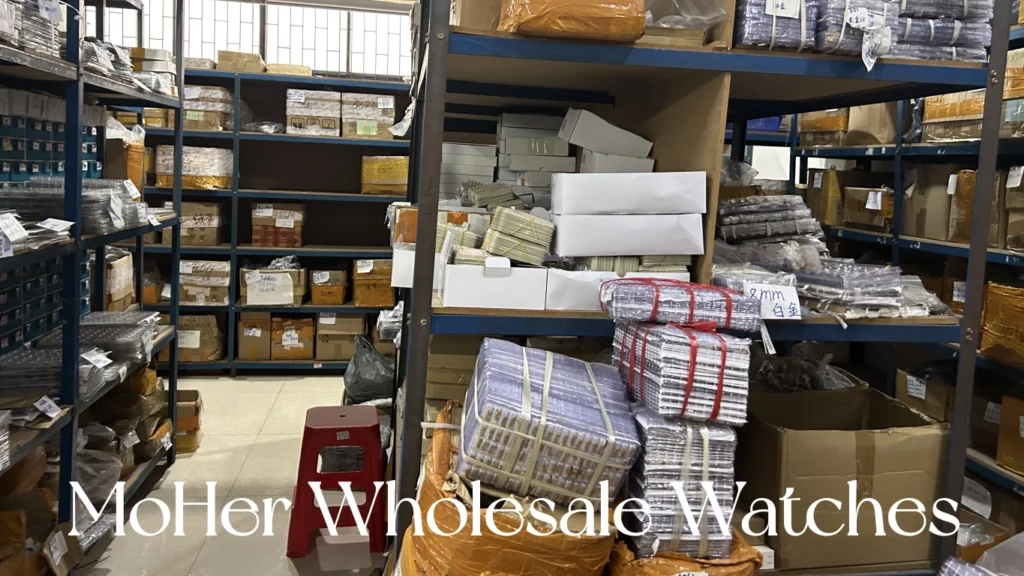
First, we maintain a dedicated component warehouse, stocked year-round with core parts like movements, cases, and dials. That means a small order doesn’t have to wait on a supplier’s lead time for every individual component before production can even begin. We already have what we need on hand, so we can move straight into assembly instead of starting a small order from zero the way many factories do.
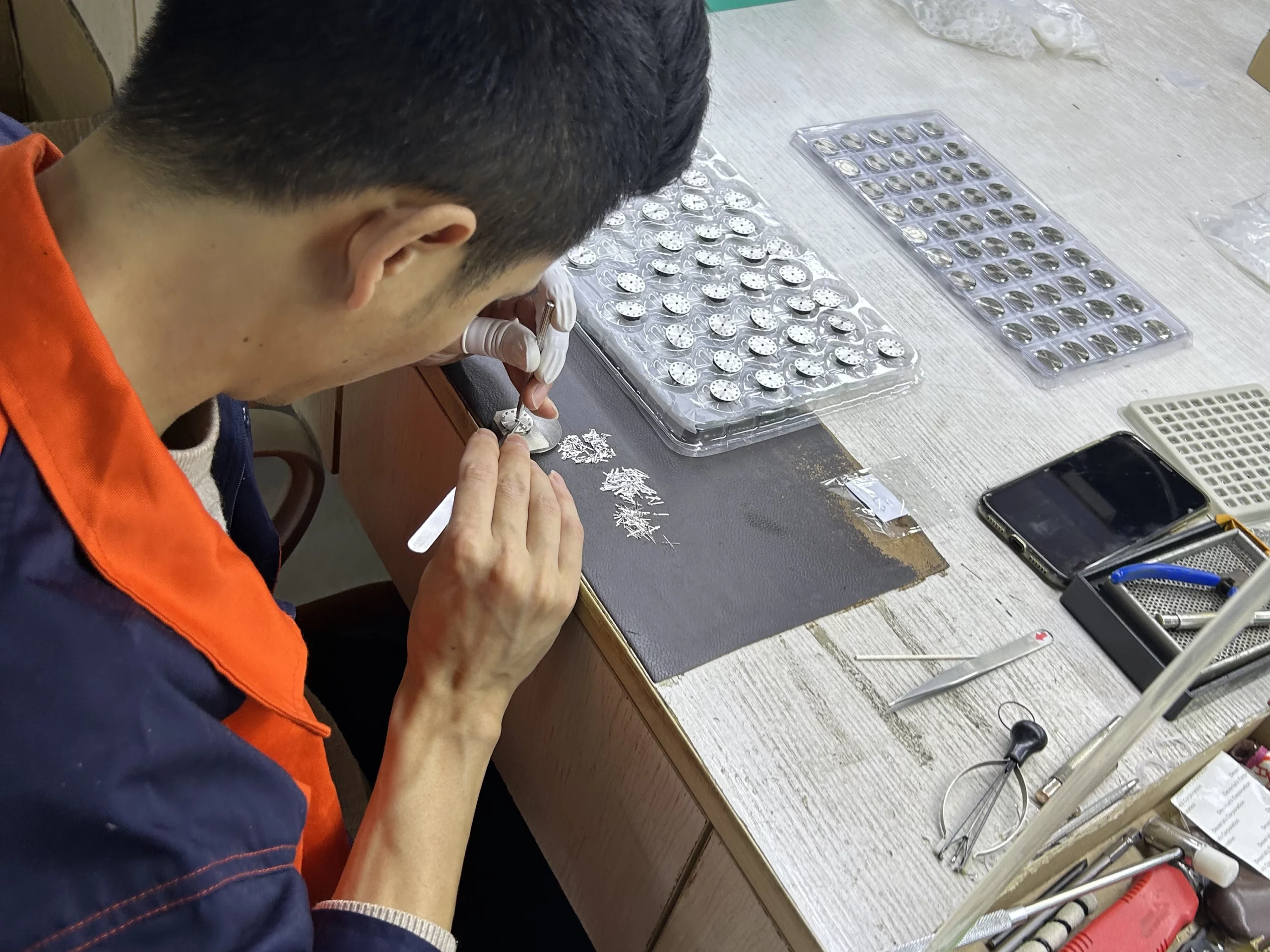
Second, our production team is experienced and stable, not a rotating crew that’s still learning on the job order by order. Years of hands-on assembly and inspection work have given our people the skill to handle frequent style changes and varied specifications smoothly, which is exactly what small-batch, multi-style production demands on a daily basis. That depth of experience means we don’t have to lower our standards just because a particular run happens to be smaller than usual.
Third, we build small-batch orders into our regular production schedule, rather than treating them as an afterthought squeezed in between bigger, more profitable jobs. That keeps lead times predictable and prevents small orders from quietly getting bumped, delayed, or deprioritized whenever a larger client’s order comes in.
Our Solution: Small Batch Doesn’t Mean Low Standards
With 10 years of watchmaking experience behind us, and more than 500 new designs released every year, we’re able to keep both cost and lead time down without cutting corners on quality anywhere in the process.
We offer two paths, depending on where your brand is in its journey and what you actually need right now.
Semi-custom, or ODM, production starts from one of our existing, proven designs. You choose a base structure and customize the elements that matter most to your brand identity, your logo, dial finish, and strap. This path is faster and considerably more budget-friendly, which makes it a natural fit for brands just starting out and still testing how the market responds to their concept.
Full custom, or OEM, production starts from scratch. We build new molds and construct the watch entirely around your original design, with no reliance on an existing structure. This path suits brands that already have a clear identity and are ready to commit to something that’s fully, unmistakably their own.
Whichever path you choose, every order, big or small, goes through the exact same rigorous quality control standards and inspection process. That consistency is what lets us confidently promise reliable delivery regardless of order size, instead of quietly applying a different standard to smaller clients.
We Understand Customers in Every Region
Watch preferences aren’t universal, and neither is what actually makes a customer decide to buy. We work with brands across North America, South America, Europe, the Middle East, and Asia, and over time we’ve learned that each region brings its own expectations and tastes to the table.
North American customers tend to favor a wide variety of styles and put real weight on personalized customization. They want their brand’s own version of a watch, something that clearly carries their identity, not a generic design with a logo stamped on top.
South American customers pay close attention to packaging as part of the overall product experience, treating the unboxing moment as meaningful in its own right. They also favor personalized designs with a distinct, individual style rather than something that blends into the crowd.
European customers lean toward classic, timeless styles, and they hold material quality to a genuinely high standard. This is an audience where the small details, stitching, finishing, weight in the hand, matter as much as the overall design.
Middle Eastern customers favor designs with precious metal accents and gemstone details, reflecting a taste for elevated, statement-making pieces that feel special rather than ordinary.
Asian customers generally prefer simple, classic style designs that wear comfortably and versatilely across everyday contexts, from the office to more casual settings.
Understanding these differences isn’t just a nice-to-have detail we mention in a sales pitch. It genuinely shapes how we advise brands on design choices from the very first conversation, so you’re not guessing at what will resonate with your intended market.
From Idea to Finished Product: How It Works
Here’s what working with us actually looks like, step by step, from the first conversation to the finished product landing on your doorstep.
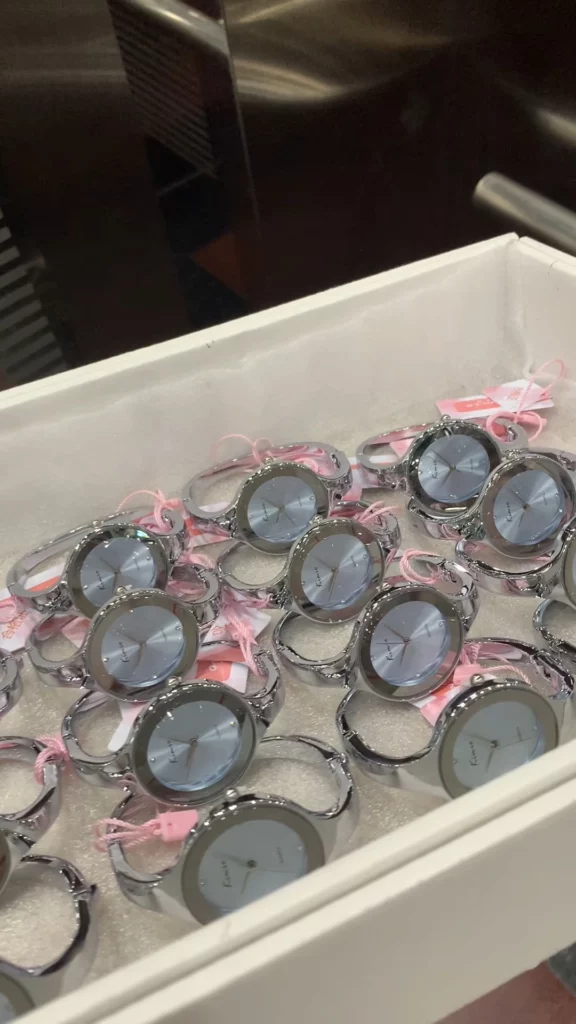
It starts with a conversation about what you’re trying to build, your vision for the brand, your budget, and your timeline. From there, we ship you ready-made stock samples of similar styles so you can inspect the craftsmanship and feel the product firsthand. To be clear, this is not a custom-molded prototype built specifically for your design; it’s simply a way for you to evaluate our actual quality before committing to anything.
Once you’ve seen and approved the samples, we confirm the design direction, the finer details, and your logo placement together. Then small-batch production begins in earnest. Orders are typically structured with a 30% deposit up front and the remaining 70% due before shipping, with a lead time of roughly 30 to 50 days depending on the complexity of your specifications.
Throughout production, the order goes through full quality inspection, and we support video inspection so you can actually see the finished units before they ship, rather than simply taking our word for it from across the world. Once everything checks out to your satisfaction, we package and ship.
One clarification worth making up front, since it shapes expectations: if you need a brand-new mold built specifically for your original design, that requires a minimum order of 500 pieces, because mold development itself represents a significant, dedicated investment on our end. Small-batch orders, by contrast, are built as semi-custom adjustments to our existing, proven styles, which is exactly how you avoid the time and cost of mold development while still ending up with a product that’s genuinely, recognizably yours.
We keep this entire process transparent on purpose, at every step. You see real progress and physical confirmation, including video inspection, at every stage of production. It’s not a black box where you place an order and hear nothing further until a box unexpectedly shows up at your door weeks later.
Who Is Small-Batch Customization For?
Small-batch manufacturing isn’t a niche service reserved for one narrow type of customer. It fits a surprisingly wide range of people and businesses building something of their own, often at very different scales and for very different reasons.
Independent designer brands use it to test a design concept in the real world without overcommitting to inventory they might not actually be able to sell through in time.
E-commerce and social-first brands use it to launch limited editions or collaborations that spark social buzz, exactly the kind of scarce, talked-about drops that thrive on being small in number.
Corporate and gifting clients use it when they need a small quantity of premium-feeling custom watches for a specific occasion, without the excess and waste of a mass order sitting unused in storage.
Offline jewelry and accessory stall owners, along with boutique retailers, use it to add a differentiated watch line to what they already sell, starting small and low-risk before deciding whether it’s worth committing further.
Wedding and event planners use it when they need a small quantity of custom watches as favors or keepsakes, often with personalized engraving that a large-volume factory wouldn’t bother accommodating for such a small order.
Influencers and KOLs use it to launch a co-branded or personal-name watch, testing whether their audience genuinely wants to buy before investing in scaling up production further.
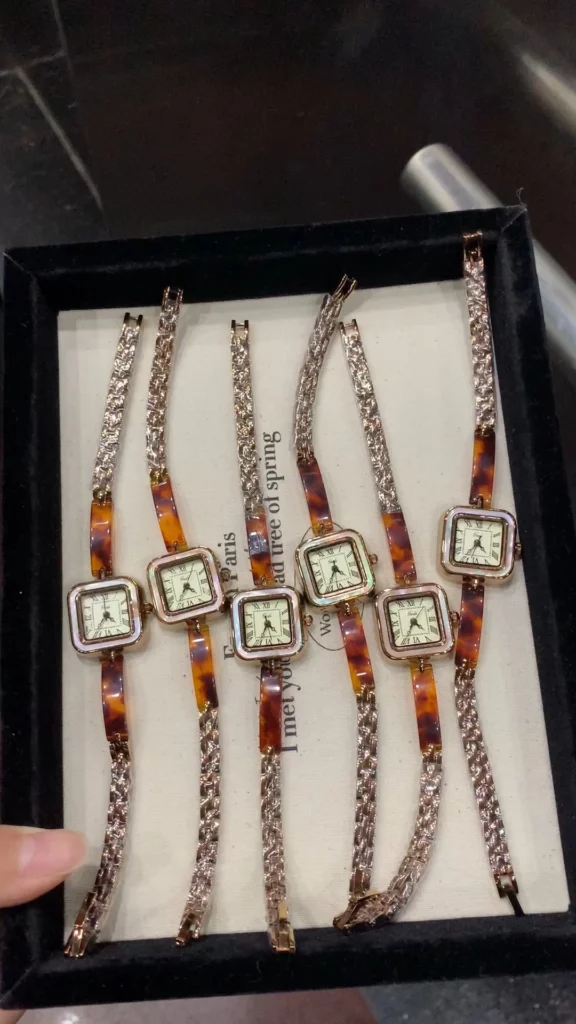
If you see yourself in any of these situations, small-batch customization is probably built for exactly where you are right now.
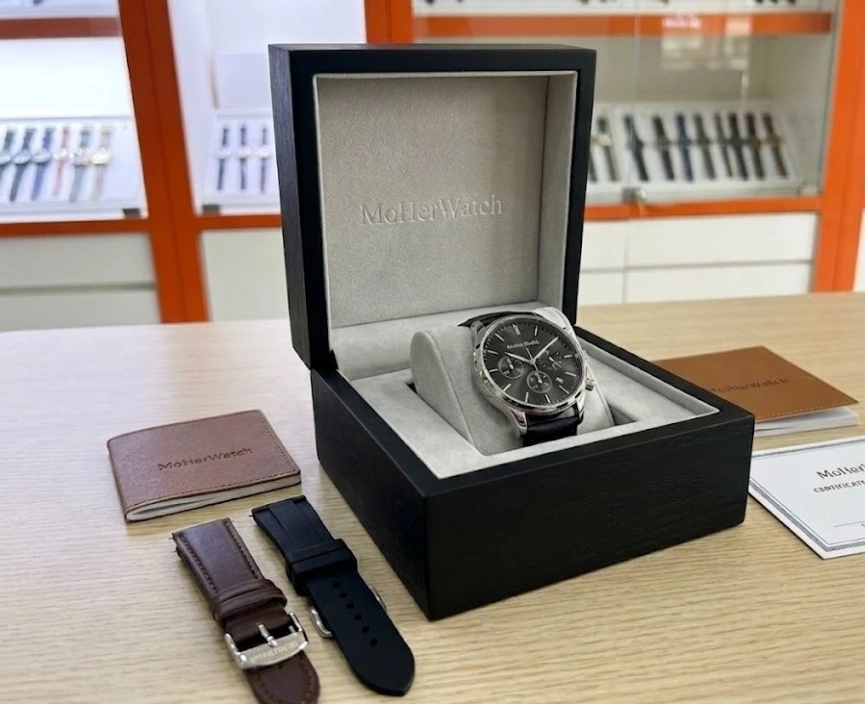
Case Studies: Growing Alongside Small Brands
The following three examples illustrate the kind of “start small, grow steadily” partnership we aim to build with every client who works with us. They’re representative of the situations we regularly encounter; before publishing this piece more widely, we’d recommend swapping in real, client-approved stories, along with any testimonials, brand links, or press mentions that can be cited as supporting evidence.
Case 1: A European Independent Designer Brand
An independent designer wanted to launch a watch collection entirely their own, but factory after factory quoted a minimum of 500 to 1,000 pieces, far beyond what a first, unproven run could reasonably justify. We started from one of our proven case structures and changed only the dial color and logo, bringing the order down to an affordable small batch that matched the designer’s actual budget. The brand completed its first small-batch delivery, launched successfully on its own website, and, after validating real demand, placed a larger second order with us.
Case 2: A Middle Eastern Wedding & Gifting Brand
A wedding planning company wanted to offer personalized, engraved watches as guest favors, but the order was small and the deadline was tight, tied tightly to a specific event date that couldn’t move. Using our in-stock components and semi-custom process, we completed sample confirmation and small-batch delivery within that narrow seasonal window without sacrificing quality. The client now offers custom watches as a standing part of their wedding gifting service, and the relationship has become a recurring, ongoing collaboration.
Case 3: A North American Crowdfunding & DTC Brand
A North American startup team wanted to launch a watch through a crowdfunding campaign but didn’t want to take on large inventory risk before actually knowing whether the market would respond to their design. We supported the team with a small-batch run for their crowdfunding samples and initial shipment, then scaled smoothly into larger production once the campaign successfully hit its funding goal. The team has since signed a long-term production agreement with us, built on the trust established during that first small run.
Whether You Need 100 Pieces or 1,000
Building your own watch brand shouldn’t require you to either abandon the idea altogether or gamble your entire budget on an order size that doesn’t actually match where you are right now. Whether you need 100 pieces or 1,000, we’ll help you turn your idea into a real watch, one you can actually hold in your hand and be proud to put your name on.
Contact us for a free quote, or book a sampling consultation to see and feel the quality for yourself before you commit to anything at all.